Context
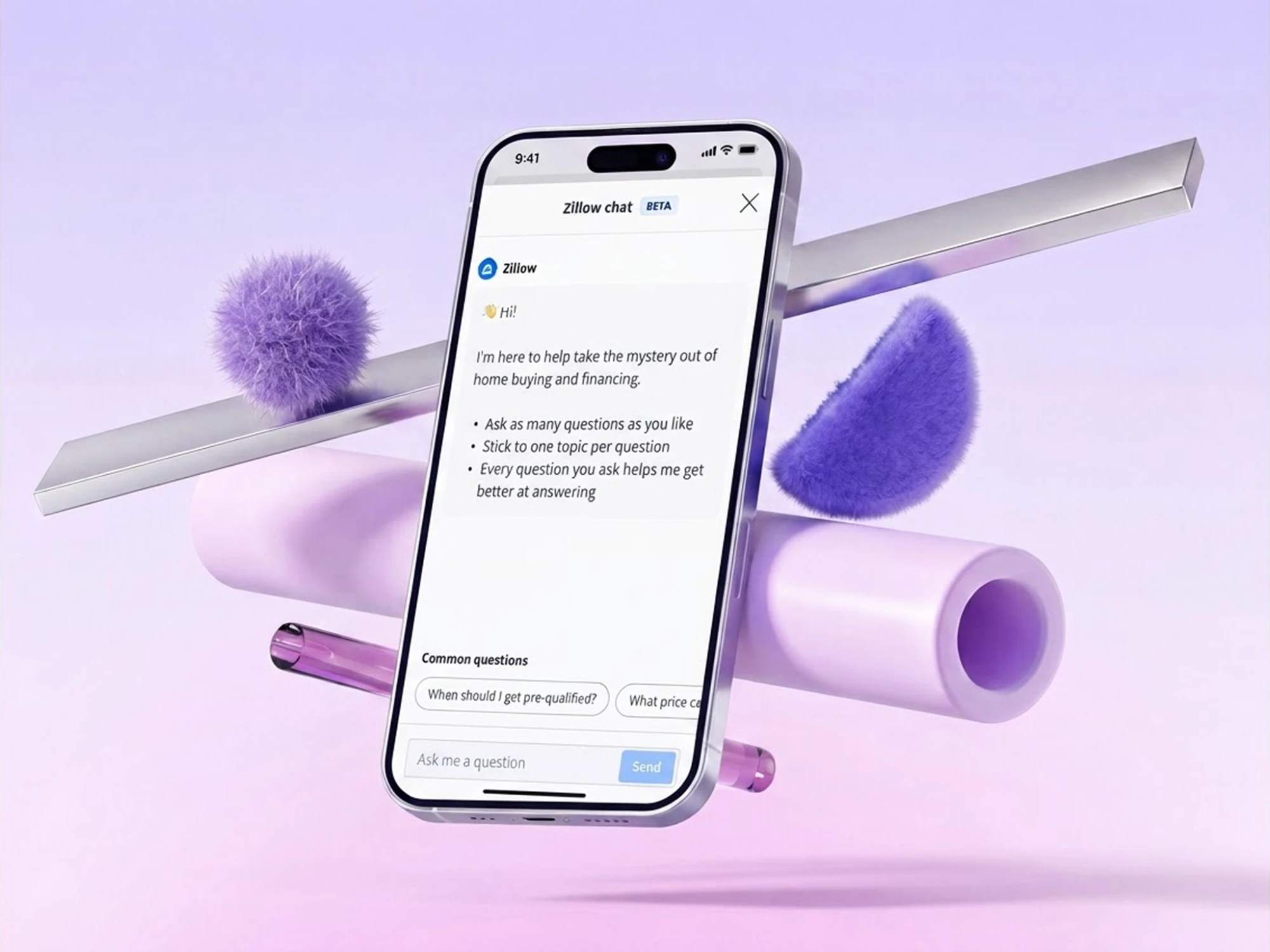
As a senior designer on the Dream and Search team, I was asked in 2024 to lead design for AskZ, a finance-focused chatbot to help people with financial questions on the way to a home, and the company’s first LLM product. I was the design lead, partnering with three PMs, three engineering teams, a researcher, and a content strategist, with AI, Search, Mortgage, and Legal leadership all at the table. It shipped on web and mobile web, with webview integrations for iOS and Android.
Real estate is an unforgiving domain for generative AI. A bad answer could lead to a distorted decision about the biggest investment the user could make, or could result in legal action against the company. The quality bar for the LLM’s responses had to be set incredibly high.
How I worked
This was a new technology for the whole organization, so I embedded directly with engineering rather than working downstream from them, following their investigation of building on our own LLM versus a GPT integration. I needed to understand what the model could actually do, because those properties are the design material. I also built empathy the unglamorous way: by becoming a heavy LLM user myself (for work, for personal questions, even recipes) until I had instincts for where these systems were delightful and where they were just plain annoying.
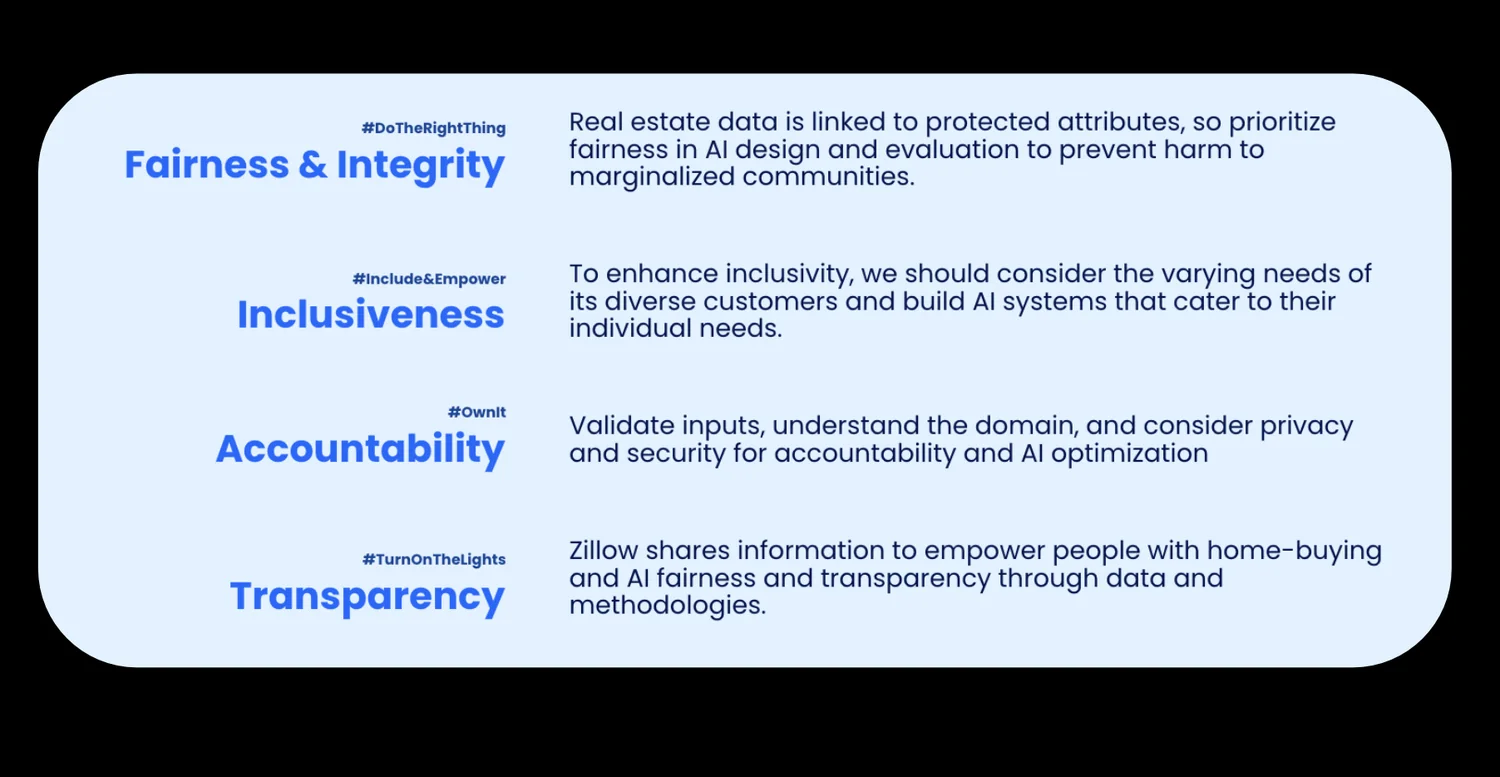
Before any interface work, I ran a collaboration session to align the team on ethics: we combined industry-leading AI values with Zillow’s core values and our design principles, landing on four commitments: fairness and integrity, inclusiveness, accountability, and transparency, with fair housing compliance woven through all of them. I also brought my content strategist in from day one, because in a product where the interface is mostly language, content strategy is half the design team.
Two directions, three weeks
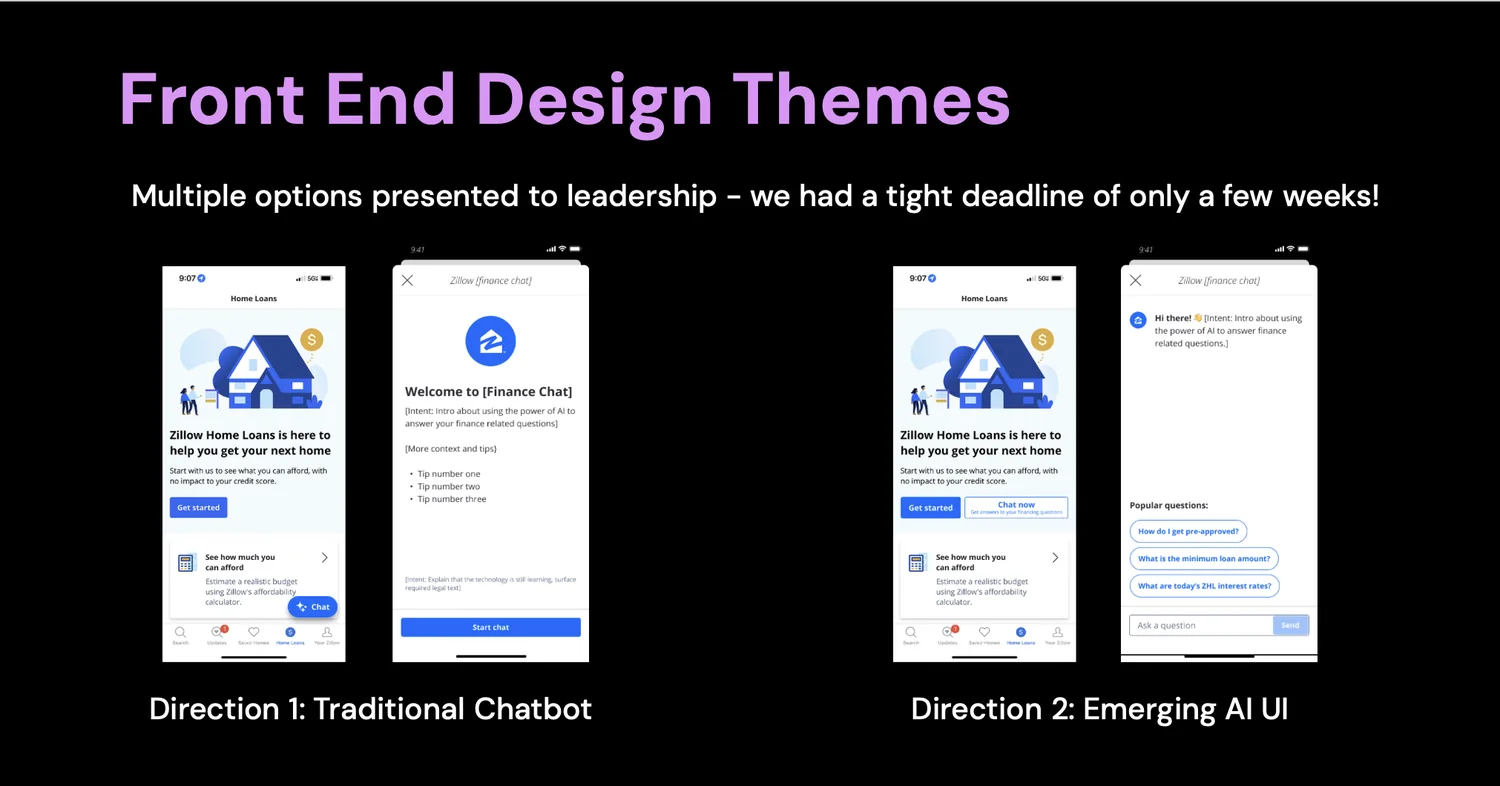
Leadership gave us a deadline of just a few weeks for design direction, so I presented two: a traditional chatbot pattern, and an emerging AI-native UI. We chose the latter, stripped to what one Microsoft designer memorably called “deceptively simple”: a clean, brand-aligned conversational interface where responses stay clear and concise, cutting cognitive load while keeping warmth. Simple to look at; very hard to keep simple.
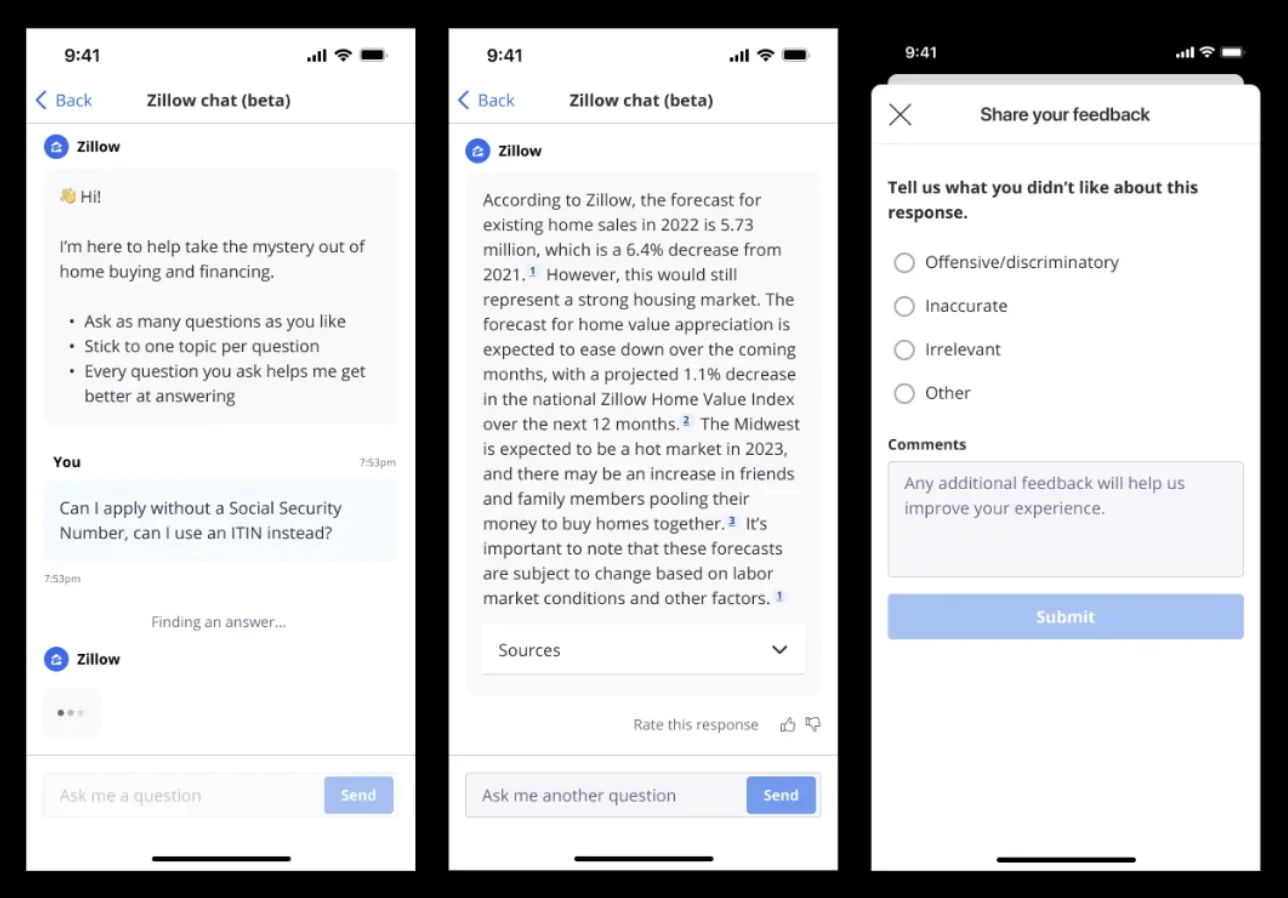
The transparency principles showed up as concrete patterns, visible in the beta screens further down this page: the product clearly disclosed that you were talking to an AI, acknowledged that answers could be wrong with avenues to verify, named its sources explicitly, and was upfront about data use. In 2024 these weren’t yet table stakes; we assembled them from first principles and early industry practice.
Requirements alignment
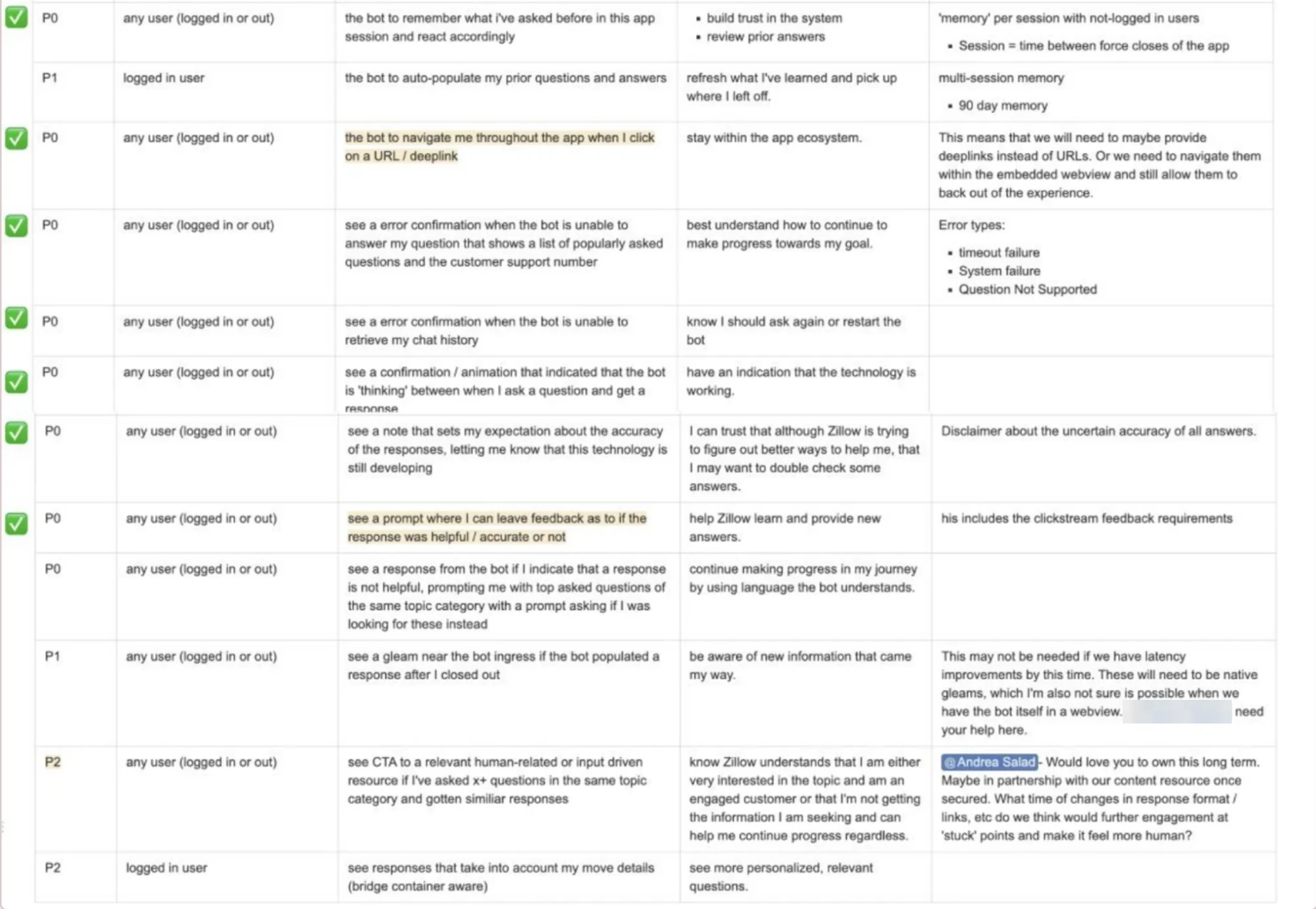
The team worked together to create user stories and priorities — this is a sample of the spreadsheets we were creating together and referencing.
Fair housing: where AI safety got real
If an LLM answers the wrong question about neighborhoods, it can walk straight into illegal steering: influencing where people look based on characteristics protected under the Fair Housing Act. Zillow’s own research found that a majority of Americans report experiencing housing discrimination in their lifetime. The team spent a great deal of the project weaving fair housing guardrails into the experience, and then developed a Fair Housing Classifier to detect noncompliant language, which Zillow later open-sourced.
I was in the room as VPs and directors worked through why these guardrails had to exist, and I could contribute to the conversation meaningfully because I’d been a real estate agent. Fair housing law was a professional obligation I’d personally carried! I was then tasked to help train the model and do some “red teaming” — I knew what questions could be asked that would likely trigger inappropriate responses, because I’ve been asked those questions in real life. Being able to advise the room and help train the model from that side of the table is the contribution I’m proudest of here.
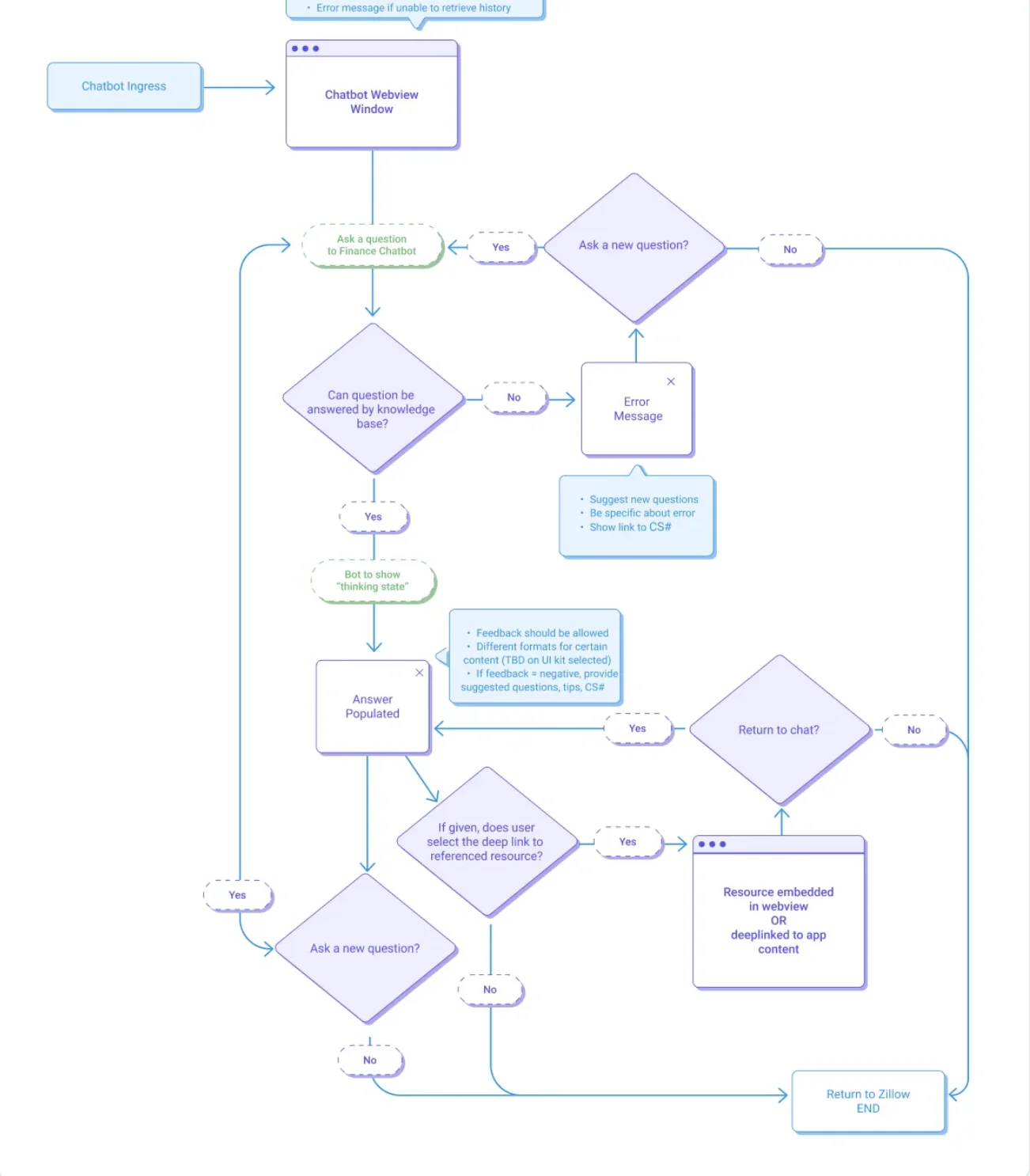
Designing the failure states
An AI product is defined by its worst answer, not its best, so we treated the unhappy paths as core product surface:
How we tested: internal first, then the real world!
Our primary launch goal was risk mitigation: get a high-quality experience in front of the broader public, not a flashy one. So we tested in phases. First, an internal MVP: we recruited across Zillow, had colleagues use the test environment, leave feedback on responses, and complete a survey, with our researcher synthesizing results. We learned a lot and shipped quick fixes before any external user saw the product.
Then a structured public beta: 10 days, 75 external users with the beta activated on their real Zillow accounts, measured on overall experience, relevancy, perceived latency, ease of use, value, and likelihood to use, followed by a six-person focus group to go deeper than the numbers.
The clearest improvement path out of the beta was that responses were too text-heavy and took a lot of effort to read. That pointed toward embedded objects, data visualizations and calculators as the way to make answers genuinely useful. Testers loved what worked: 24/7 availability and fast answers to simple questions. That signal is ultimately what unlocked the investment that followed.
Outcome
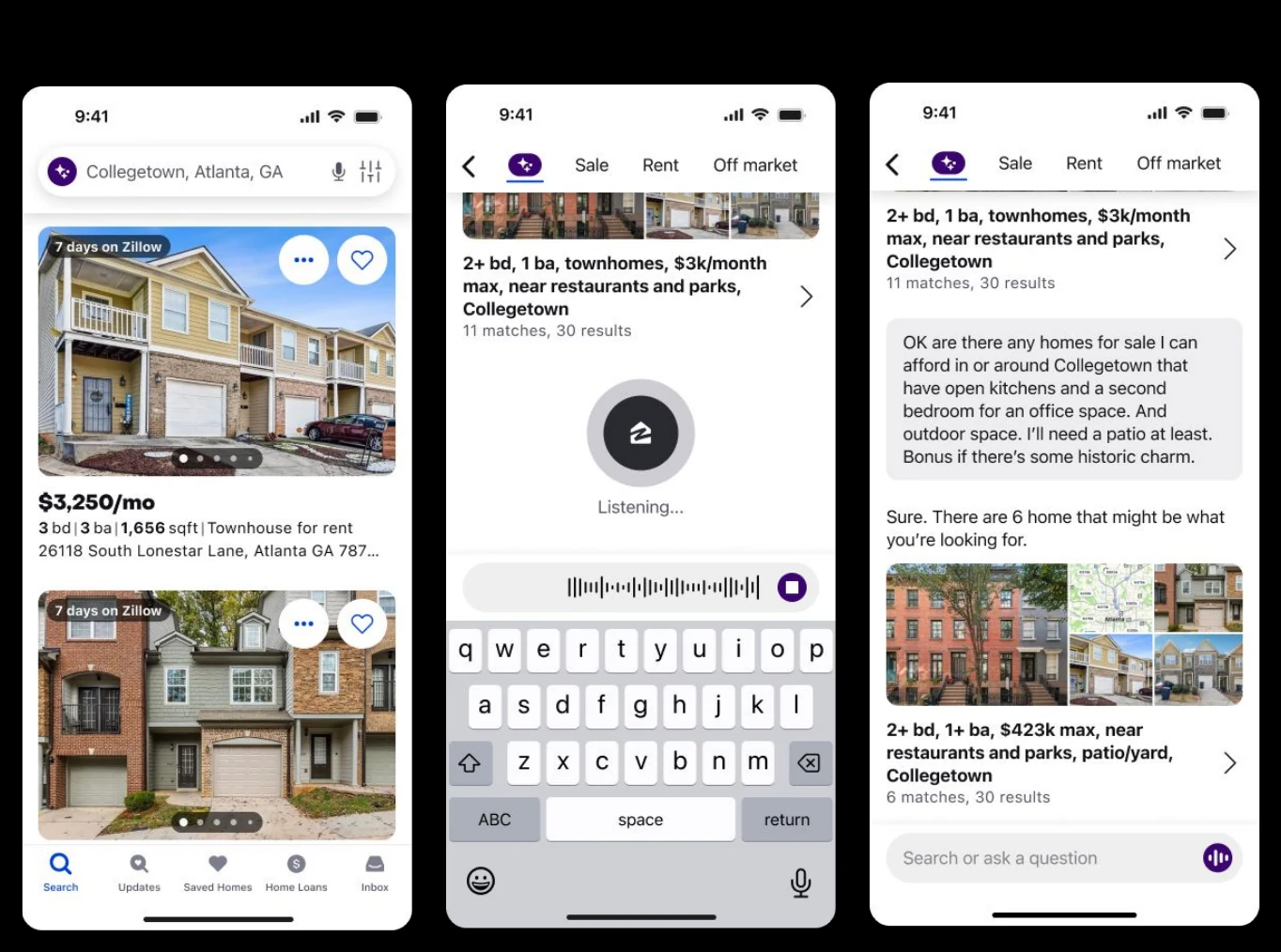
AskZ cleared the bar it was built to clear! BETA testing results ultimately led to leadership greenlighting the investment in a full-service Zillow chatbot, now being evolved into a sophisticated AI copilot.
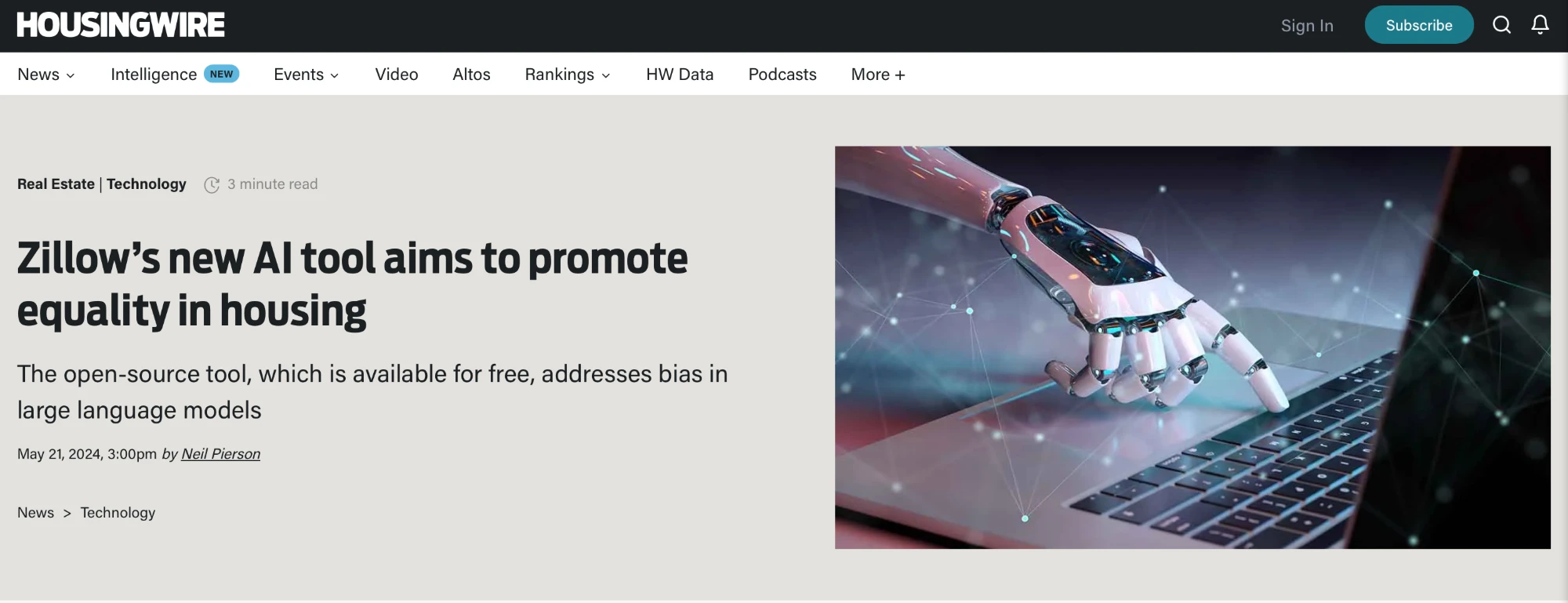
The fair housing guardrail work grew beyond our product entirely. Out of the combined effort, the engineers on my team created the Fair Housing Classifier, which Zillow open-sourced so the rest of the industry could build on it.
What I’d do differently
I committed to a three-week turnaround for design direction and I sacrificed quality for speed — I should have quoted a realistic timeline. It’s a mistake I only needed to make once: I now scope AI design work with plenty of padding to understand the underlying technology and contribute to it! More than ever, I felt the importance of a close relationship with engineering and science. This was so complex at the time, and they were a lifesaver through the whole process.