Context
Most movers don’t shop for a home alone, and every transaction has a team of people supporting it, but Zillow’s core product treated everyone as solo. What was missing, and why did it matter to the business?
The approach
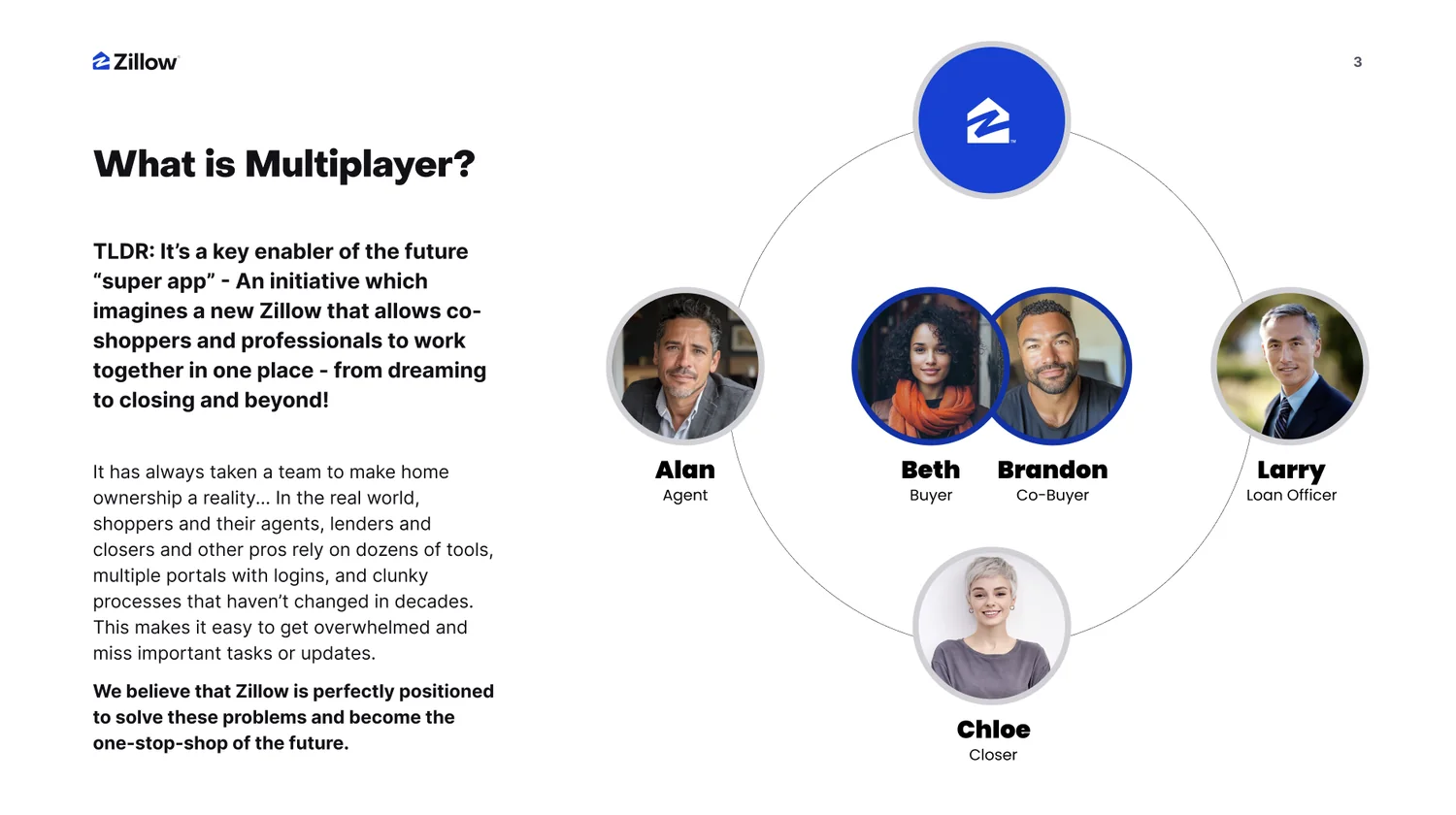
We did a deep dive into the known problems of a collaborative real estate transaction and segmented them by role. We had years of foundational research to draw on, and worked with our research partner to uncover the latest issues — participants even told us about the role AI now plays in a transaction.
I worked with product to tie business potential with these user problems. The team created an OOUX map identifying this work as a horizontal workstream that would need to touch the entire Zillow experience to be done correctly. Because the scope was too large to jump into an advanced vision of the entire experience, I ran some research prioritizing the most important opportunities to pursue.
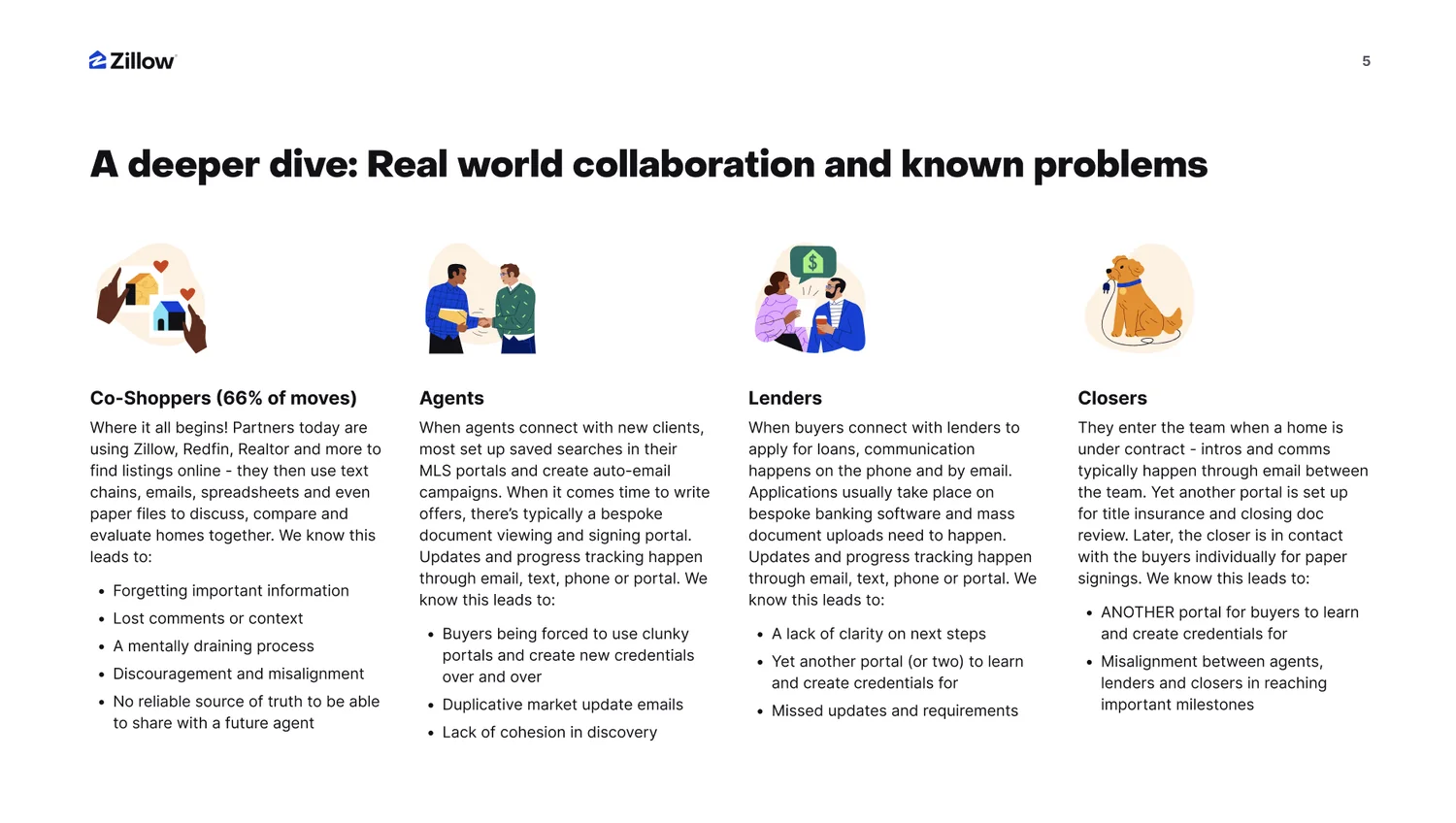
“Having one dedicated digital app that curates everything across my team of pro’s and my partner would make this process so much less unwieldy”
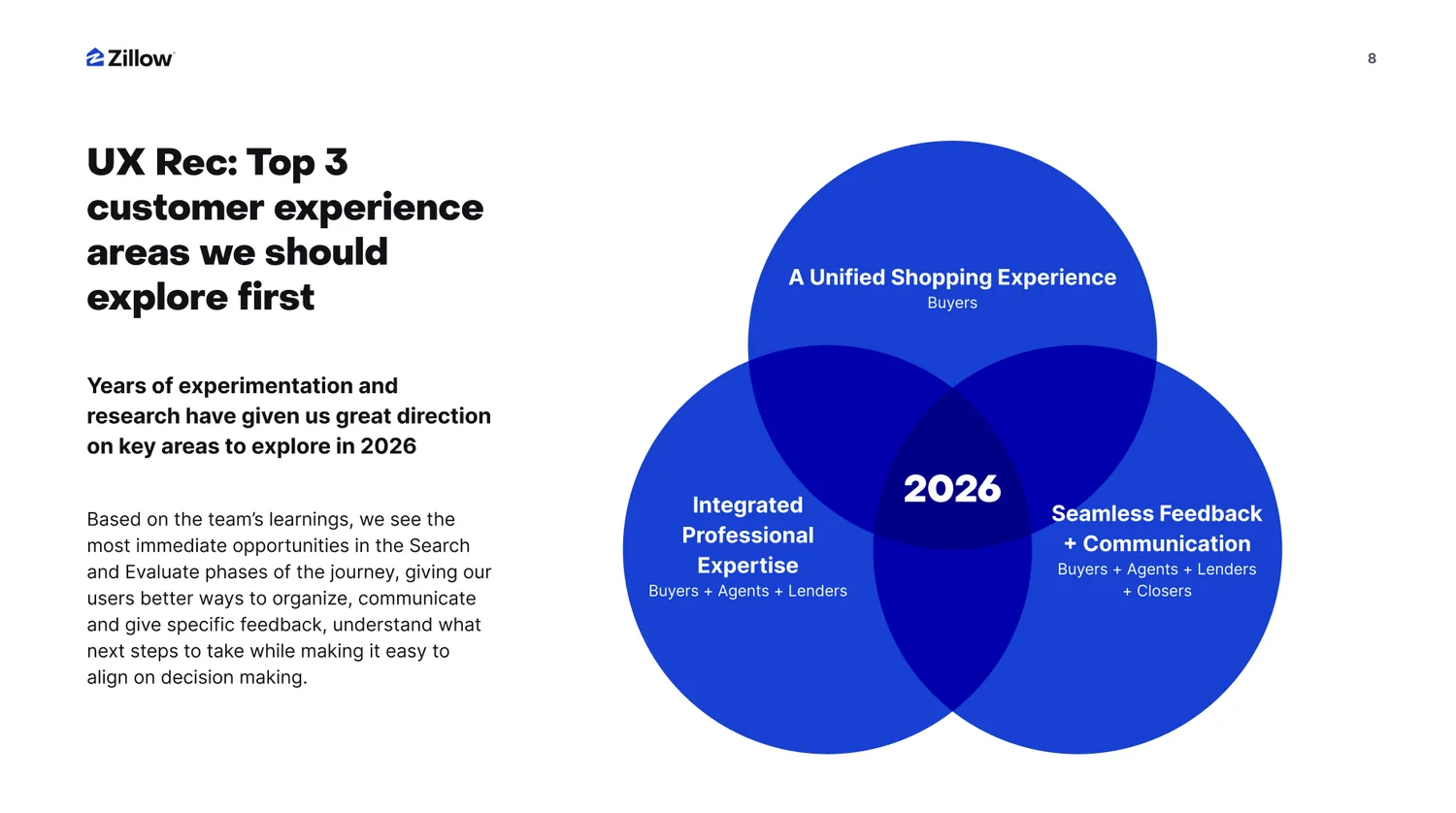
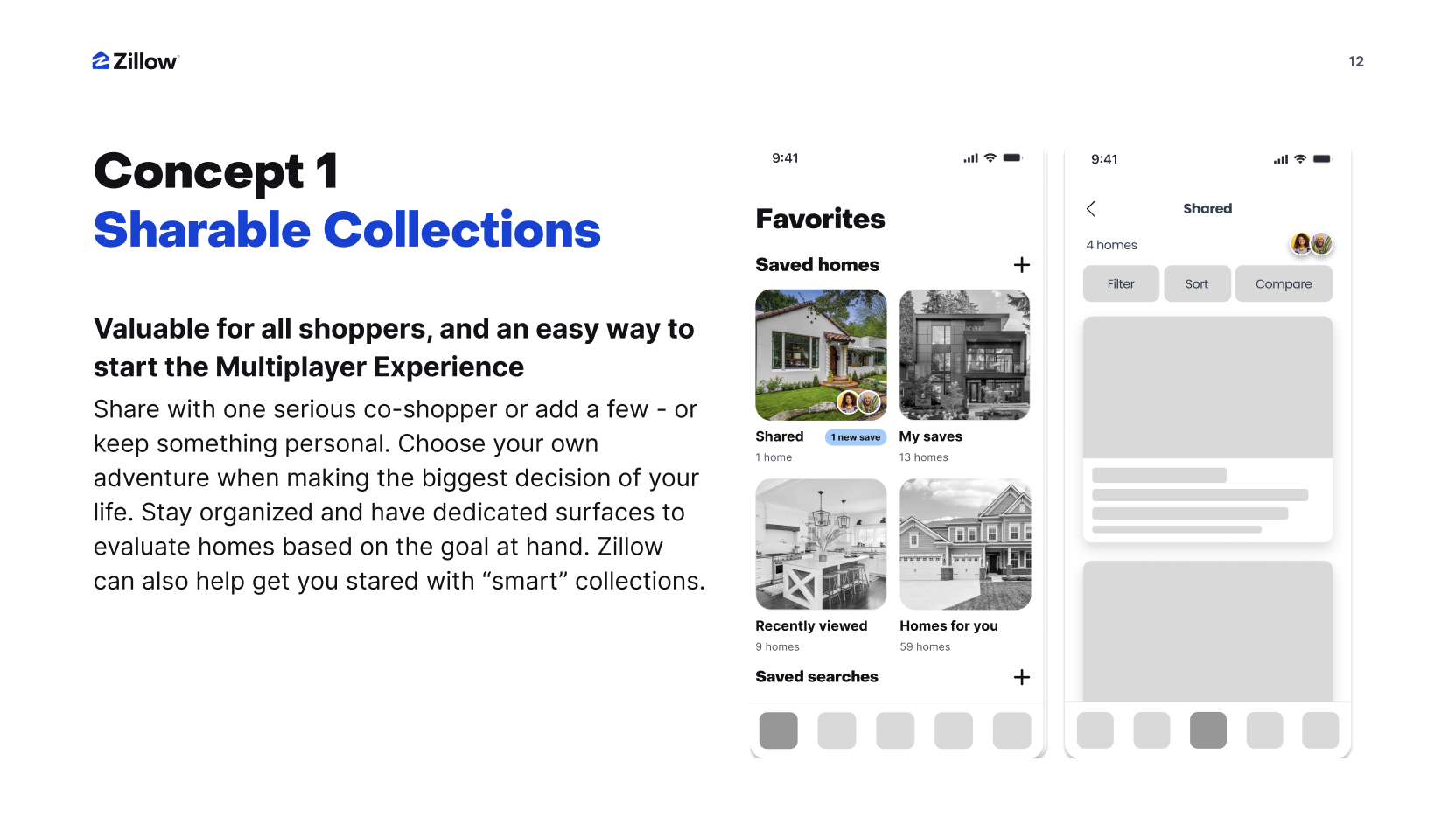
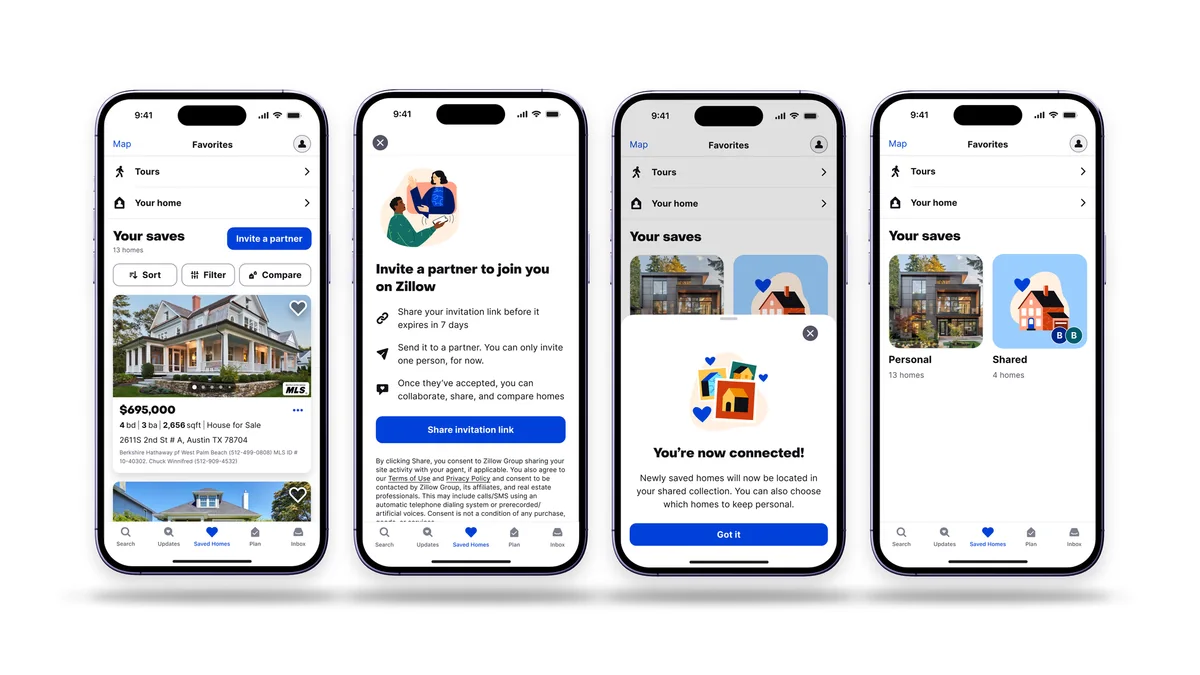
After determining the 3 key themes we should be focusing on in 2026, I led multiple brainstorms with product, design, engineers and research to ideate effective solutions in each space. Out of these came 15 candidate concepts that we ranked and prioritized on effort against impact. We moved forward with shared collections first: it tested well and carried a relatively low barrier to entry for our engineering team. That bet paid off.
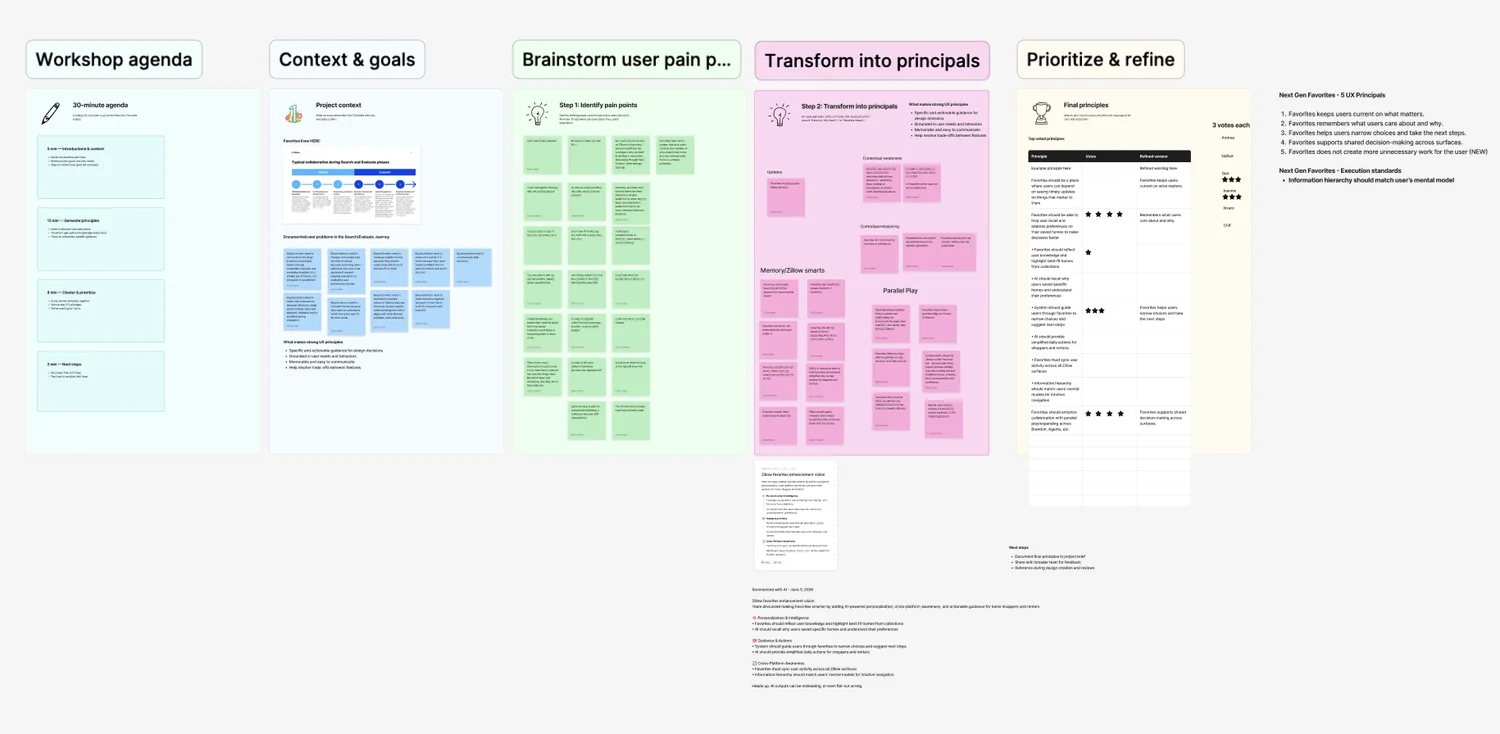
MVP Options
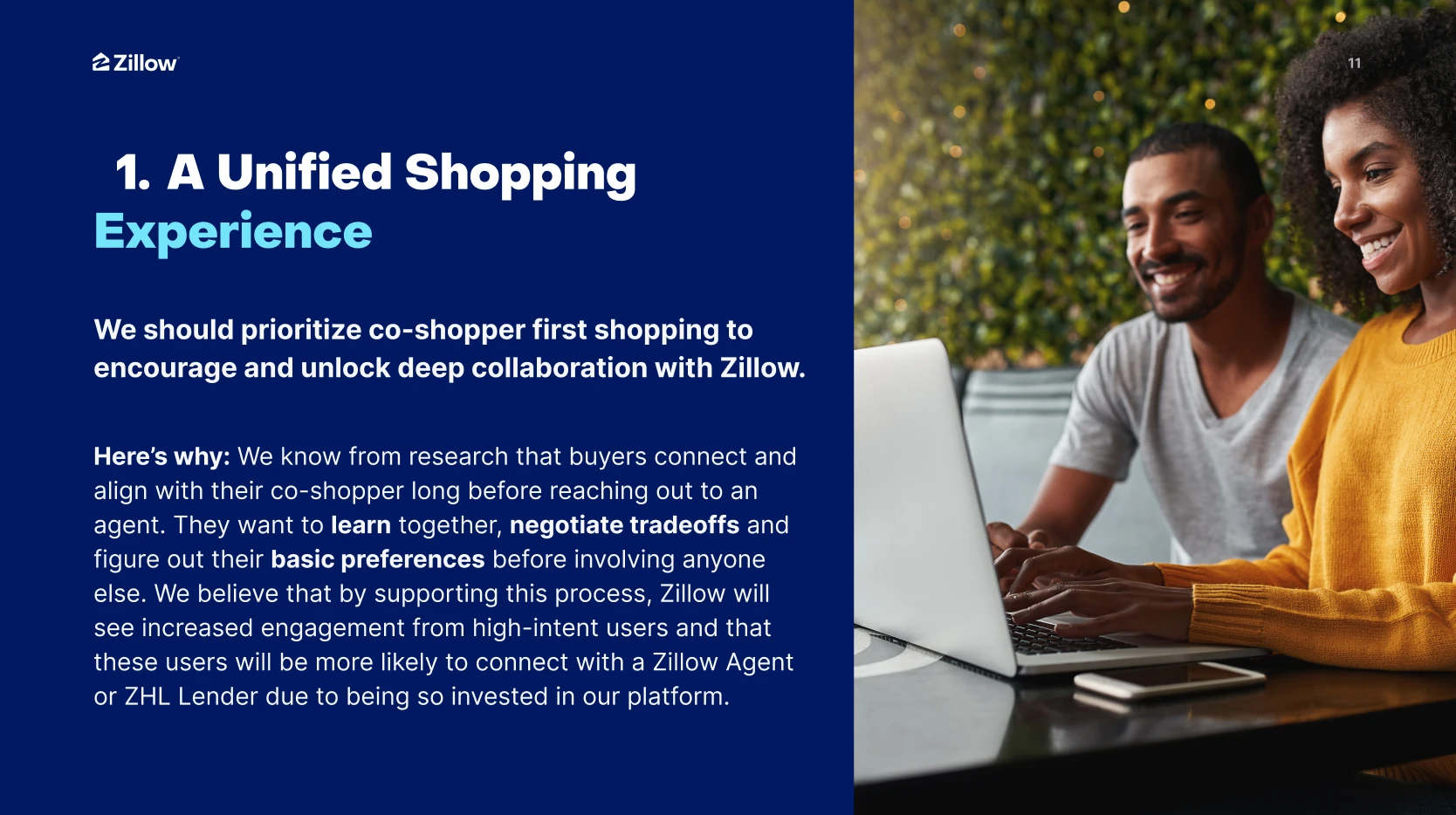
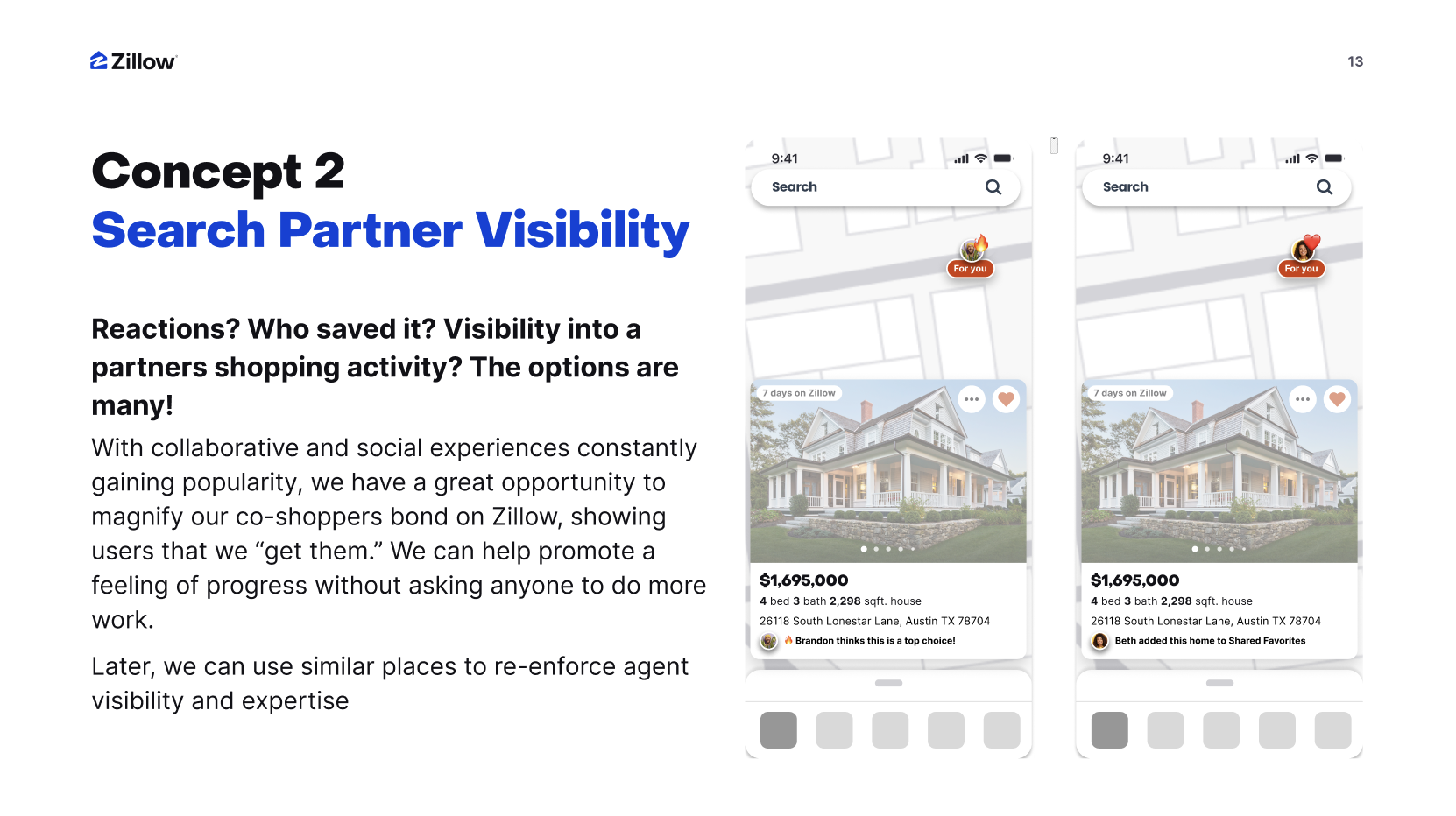
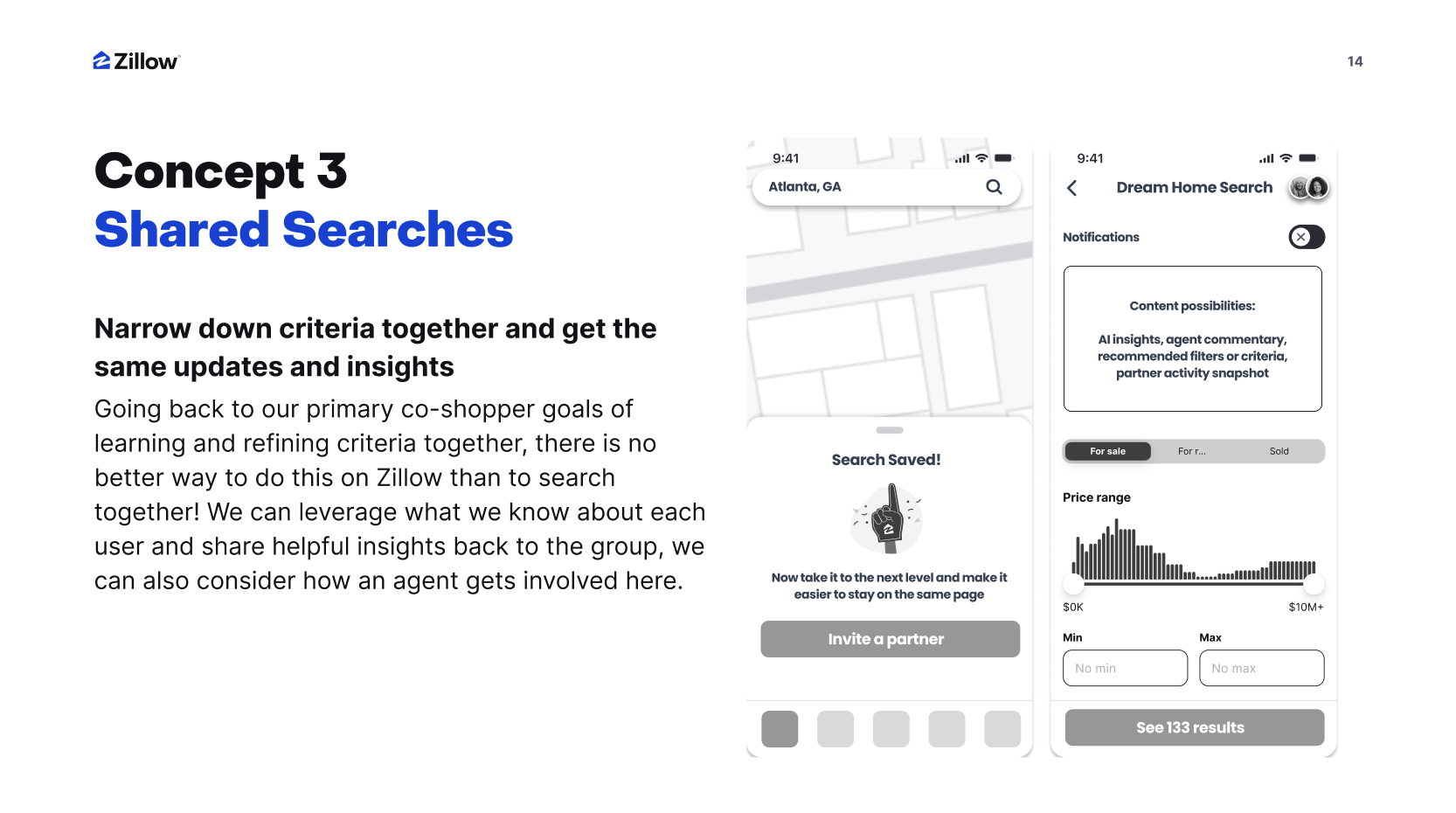
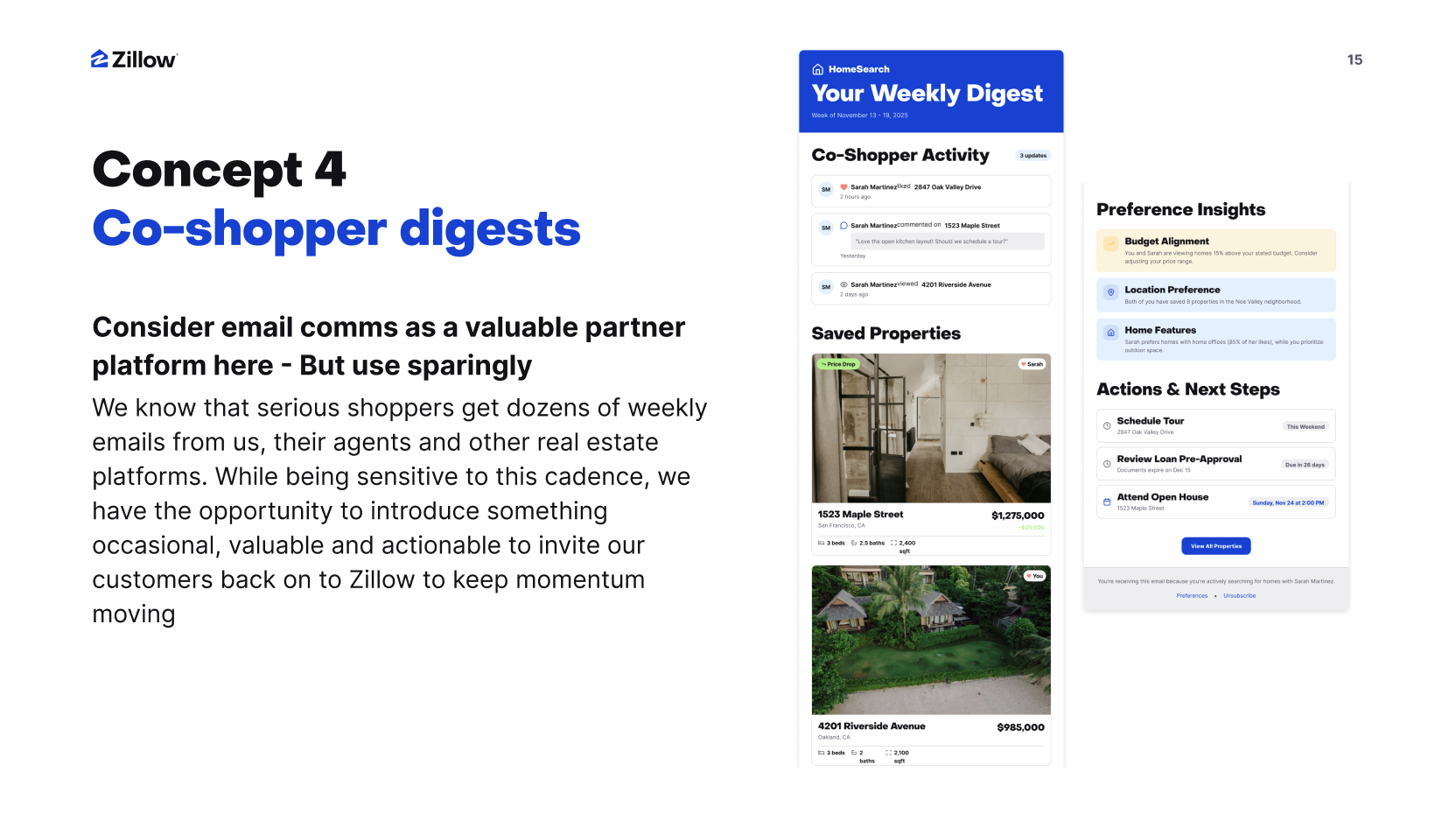
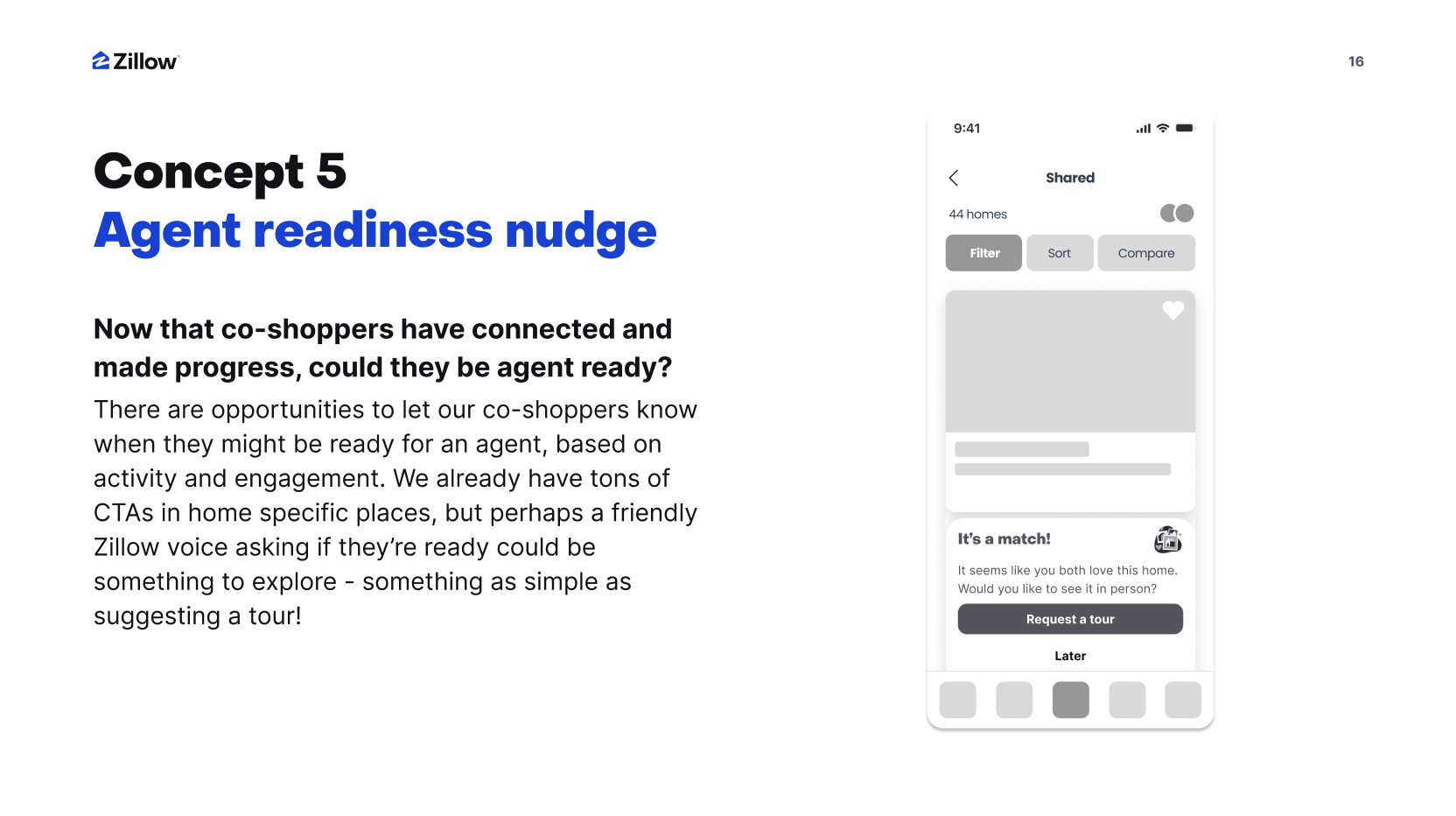
Based on what our users found to be most important and what our tech team identified as lower-lift, I created concepts to share with stakeholders, along with the potential value and tradeoffs of each. The first Multiplayer theme our business agreed to invest in was the “Unified Shopping Experience.”
Outcome
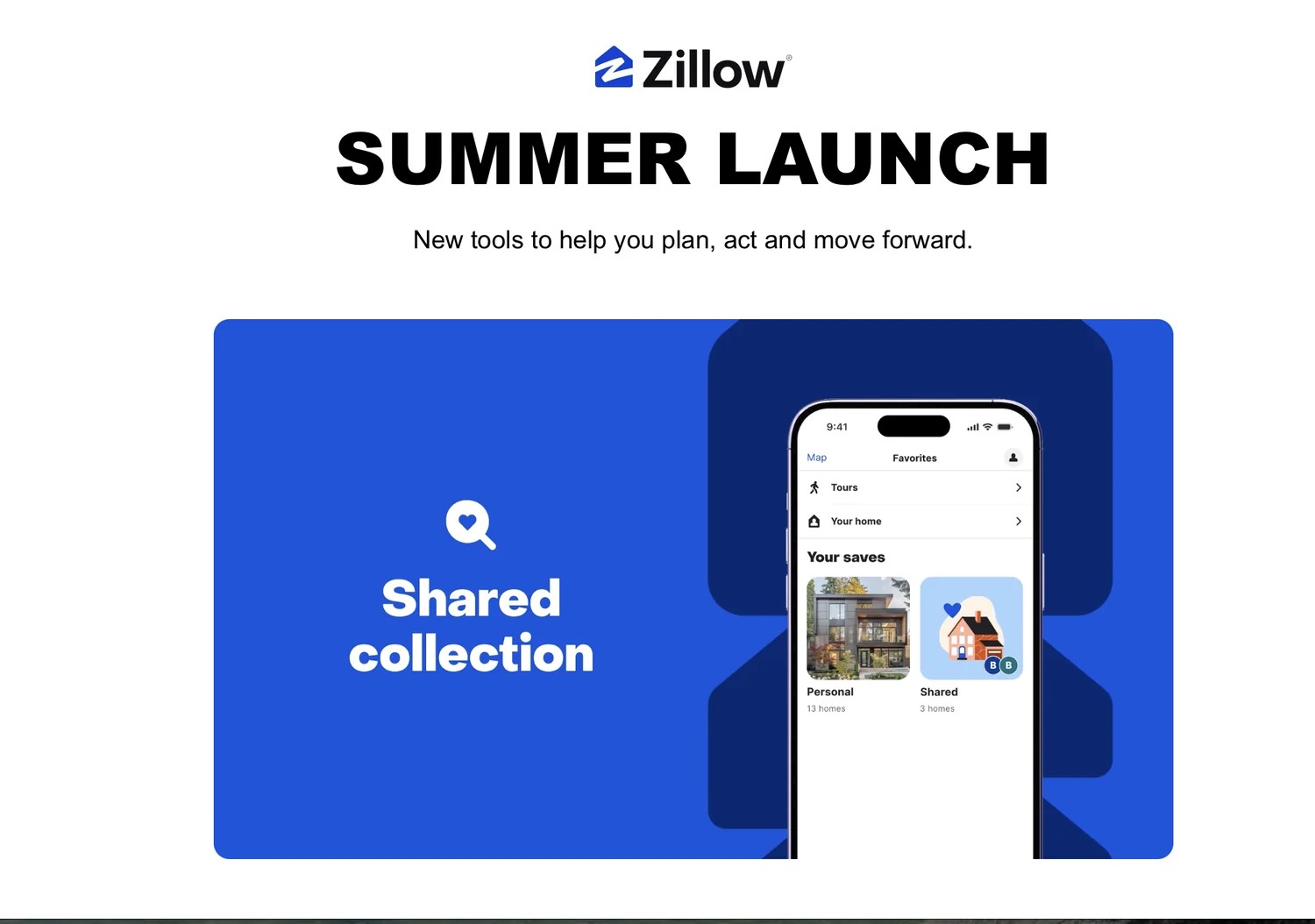
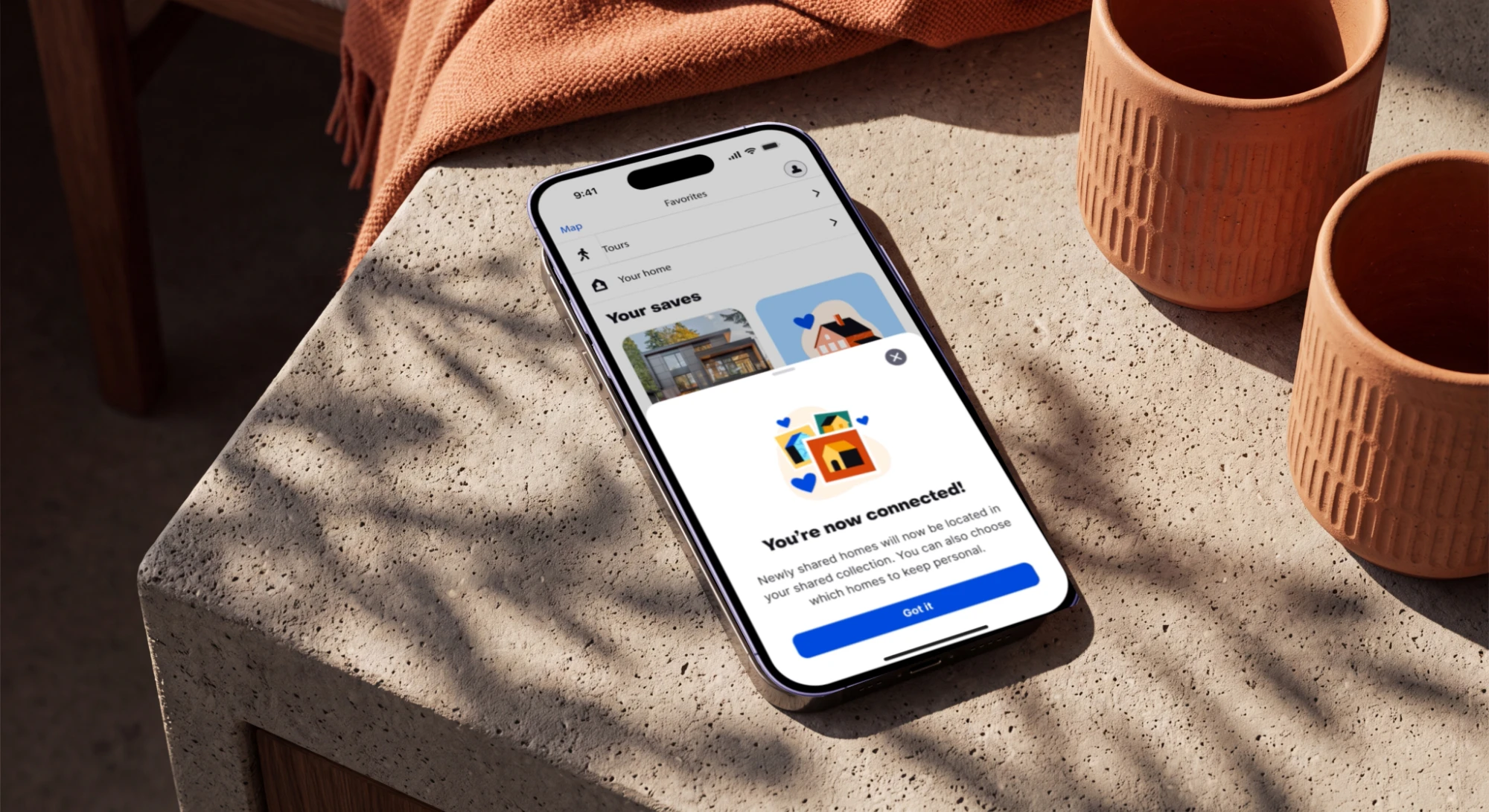
Shared Collections was the first piece of the strategy to reach people, shipping in the Summer 2026 release. As of July 2026 it had driven substantial increases in engagement and 500,000 new account activations — from connected Collection invites alone, before any acquisition spend. An invitation to look at homes together turned out to be a better argument for making an account than anything we could have put in front of a stranger.
That result moved the space from a bet to a funded direction. Four more of the swings I recommended are launching this year, and investment in Multiplayer now extends into 2027. It also seeded the Favorites Vision workstream, where collaboration stops being a feature and becomes a property of every surface.
Why this matters to me
The temptation with a horizontal strategy this large is to hold out for the visionary version of it. Sequencing the smallest shippable piece first — one that could be built without renegotiating the whole product — is what got the rest of the work funded. I’d rather earn the mandate with a shipped result than argue for it with a deck.